
New study reveals how the brain reorganizes itself in early Parkinson’s disease
A new study funded by the Pacific Parkinson's Research Institute and led by Dr. Jon Stoessl found that in early Parkinson's disease the brain's dopamine system starts to reorganize itself: regions that normally handle distinct functions (like specific body movements vs. cognitive tasks) lose their clear boundaries, with dopamine release becoming more diffuse and overlapping.
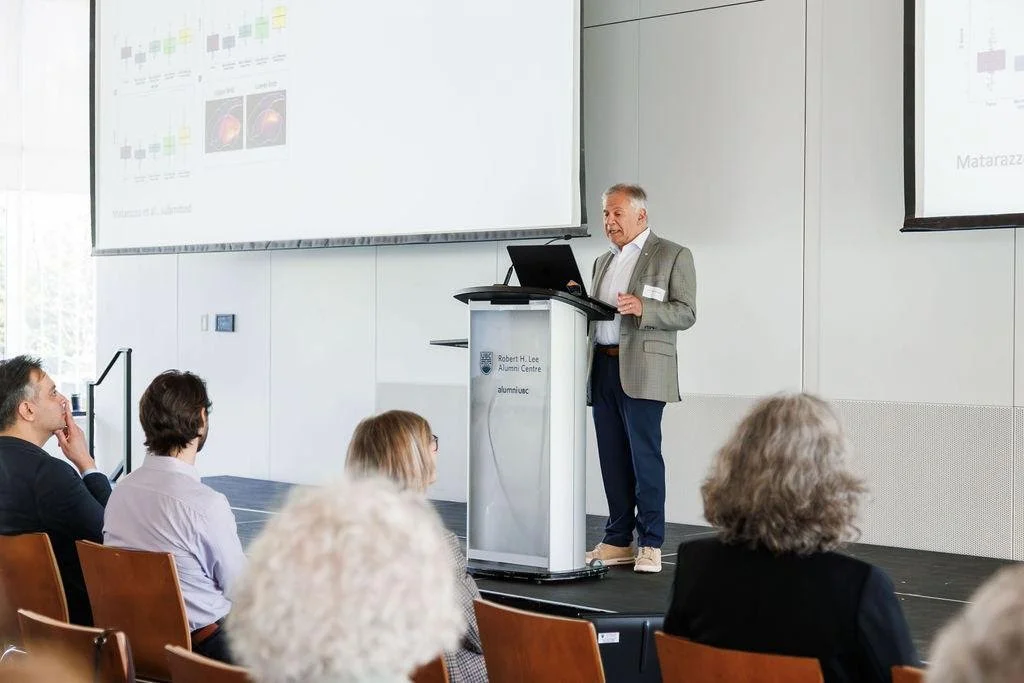
Dr. Jon Stoessl presenting at the 2026 Pacific Parkinson's Research Institute Scientific Briefing.
Less-affected brain regions appear to compensate for dopamine loss in the areas hit hardest by the disease. While this compensation may help preserve function early on, the researchers suggest this same loss of specialization could later contribute to symptoms like difficulty with precise movement and multitasking. The findings, though based on a small sample, point toward new treatment approaches that work with the brain's natural compensation rather than just replacing lost dopamine.
To read the full article, please visit the Centre for Brain Health website.
This type of cutting edge research depends on community support: the generosity of our PPRI donors makes leading PD research studies like this possible. If you would like to support further research on Parkinson’s Disease through PPRI, please donate here.